An industrial designer building the future of defence.
Enter password to continue
P.S. — I love you, Palmer Luckey
SEYON // AUTONOMOUS DEFENSE SYSTEMS
We build machines that sense, decide, and coordinate — in the air, on land, and under the sea.
KHV-03
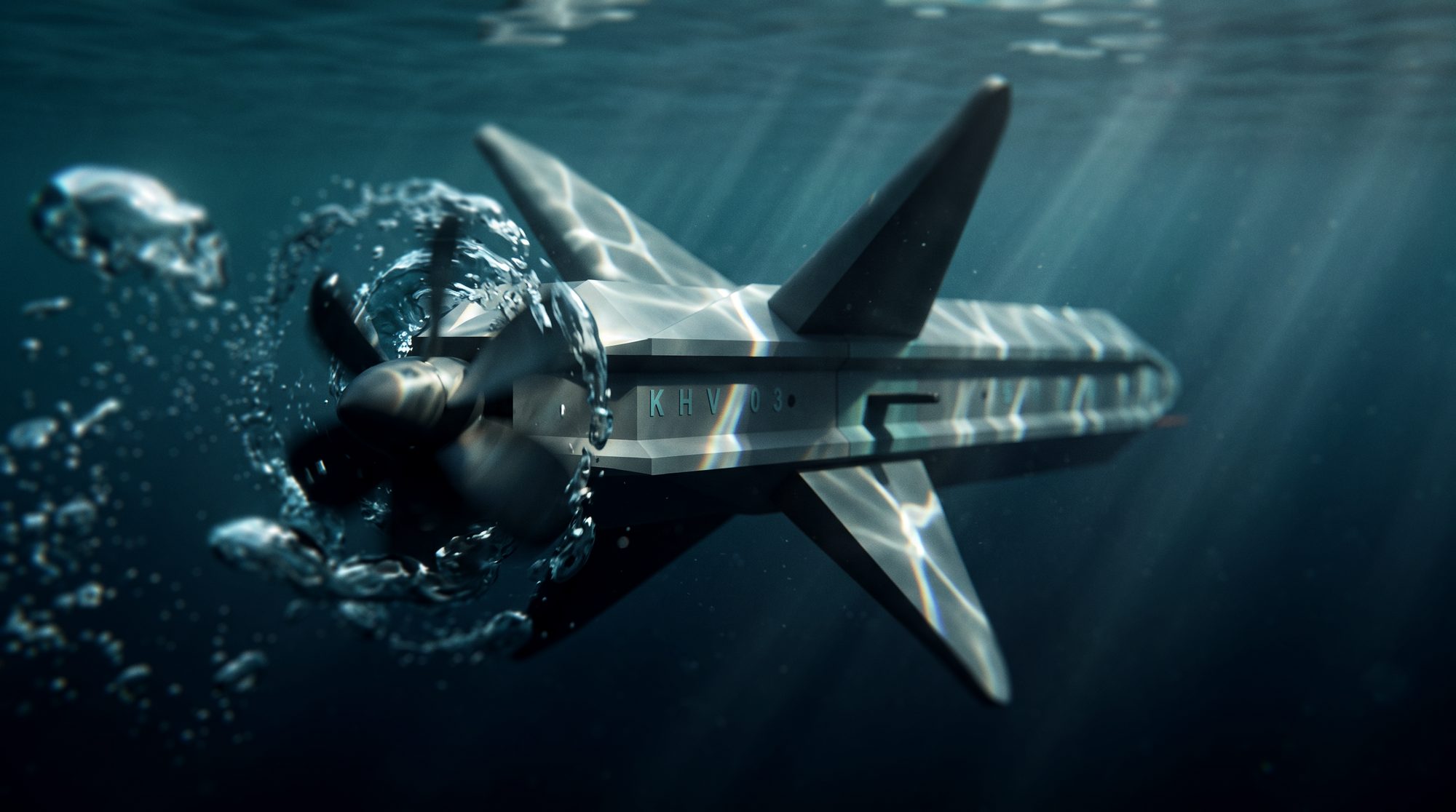
A small autonomous underwater interceptor, built to swarm.
View product →
SQ-1
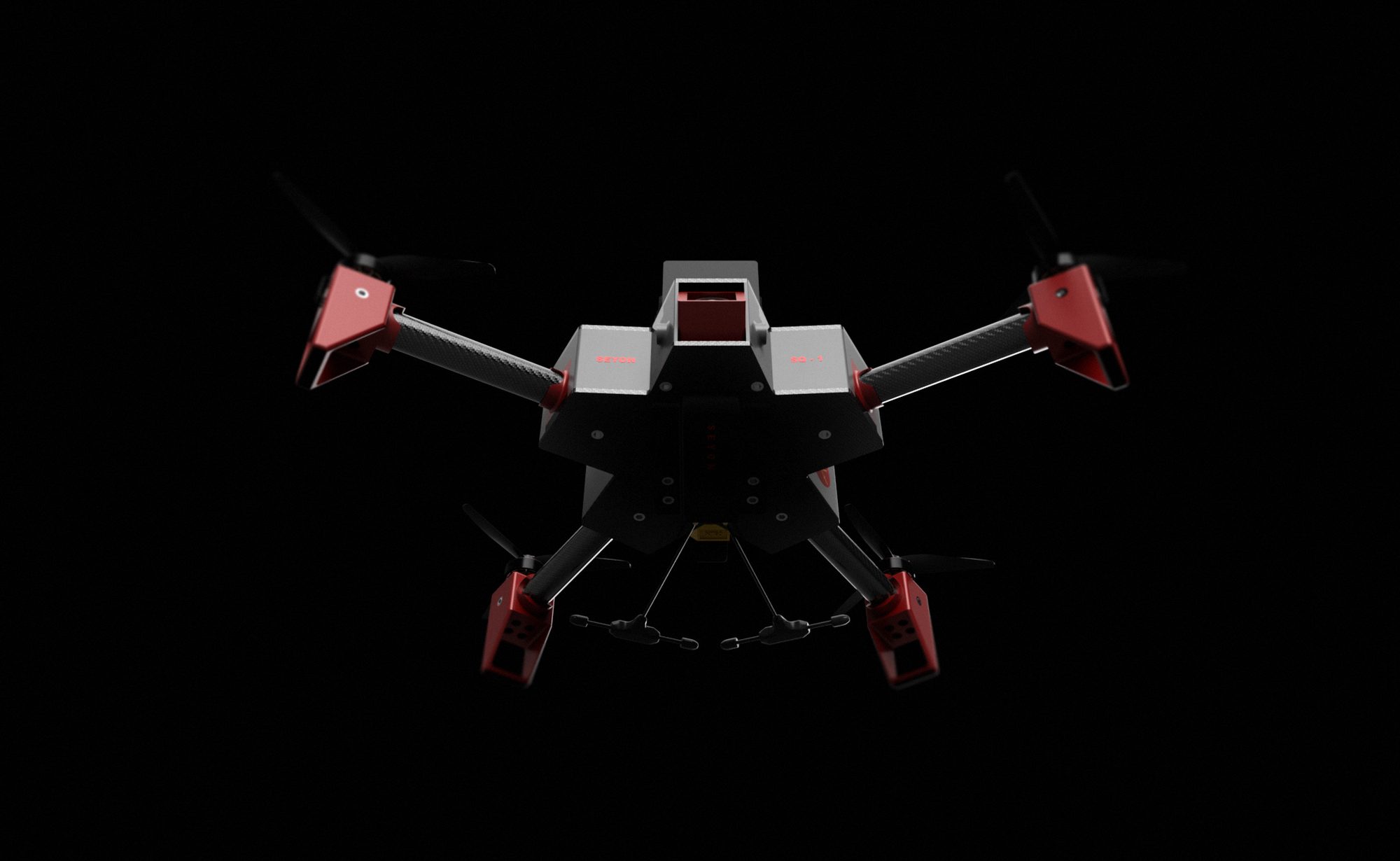
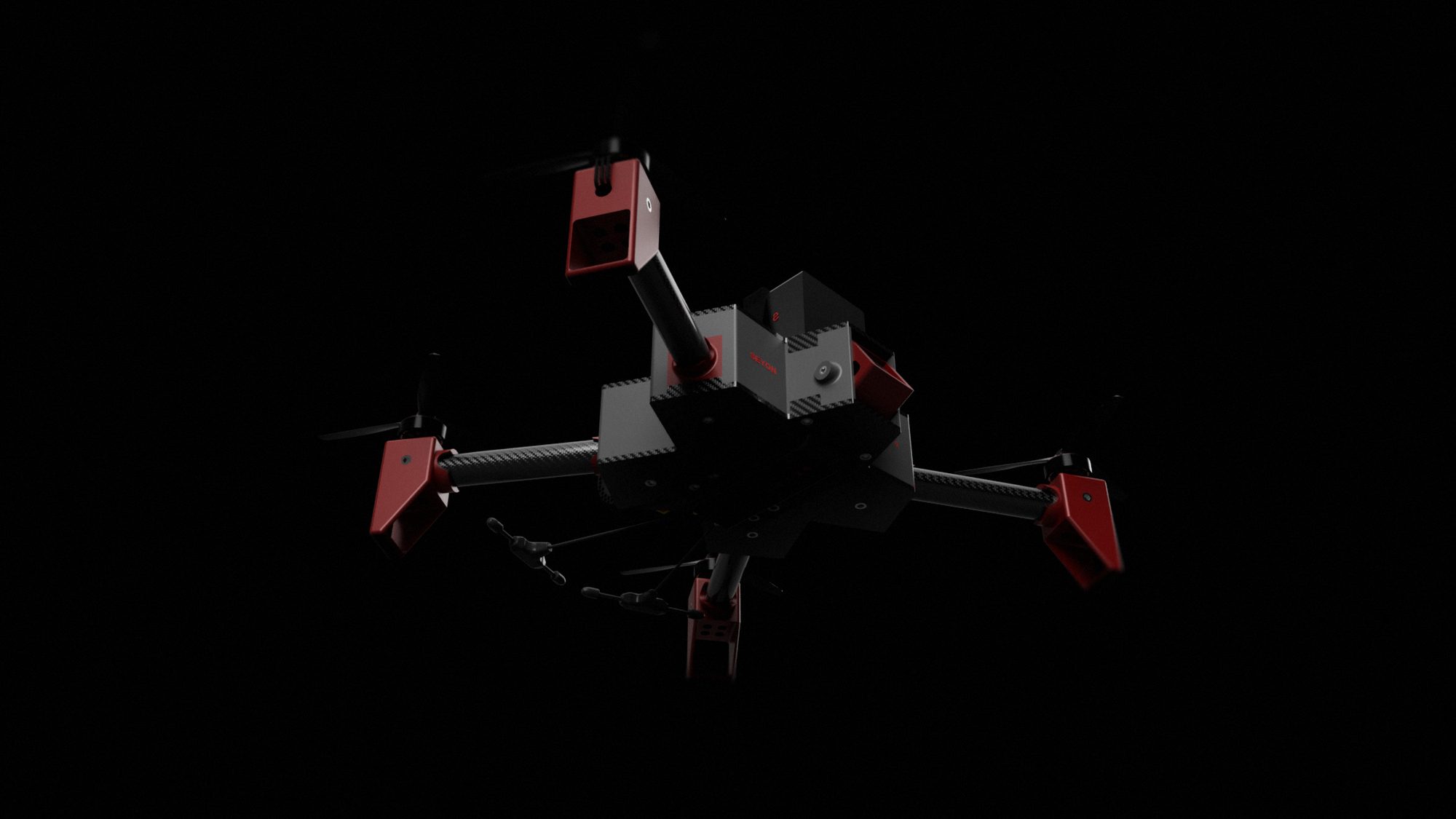
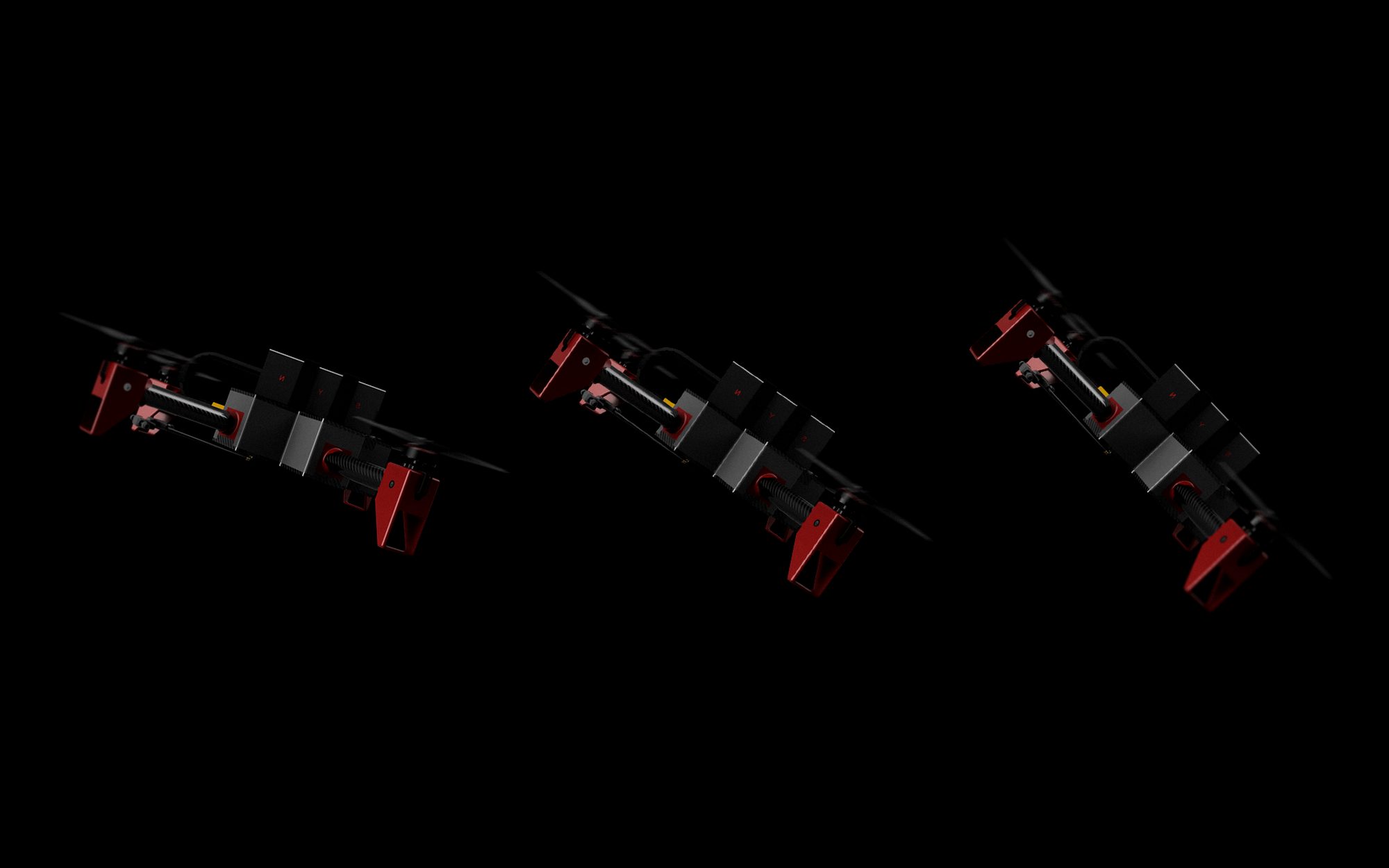
A compact recon quadcopter, built to see around corners.
View product →More systems in development across other domains.
Contact
KHV-03 · Autonomous Underwater Interceptor
Small. Autonomous. Built to swarm.
Platform
Sensing forward, compute amidships, propulsion and control surfaces aft.
01 — Platform
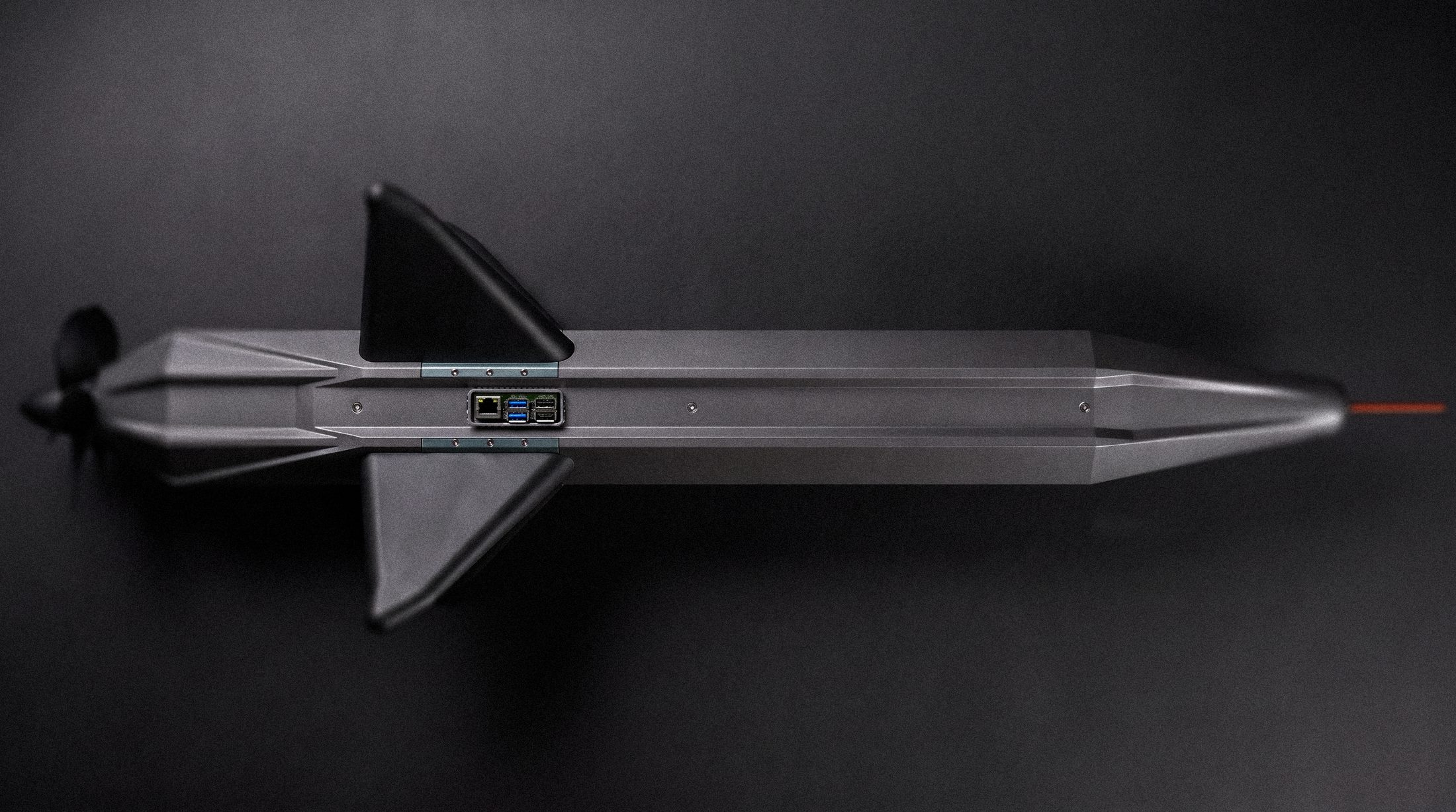
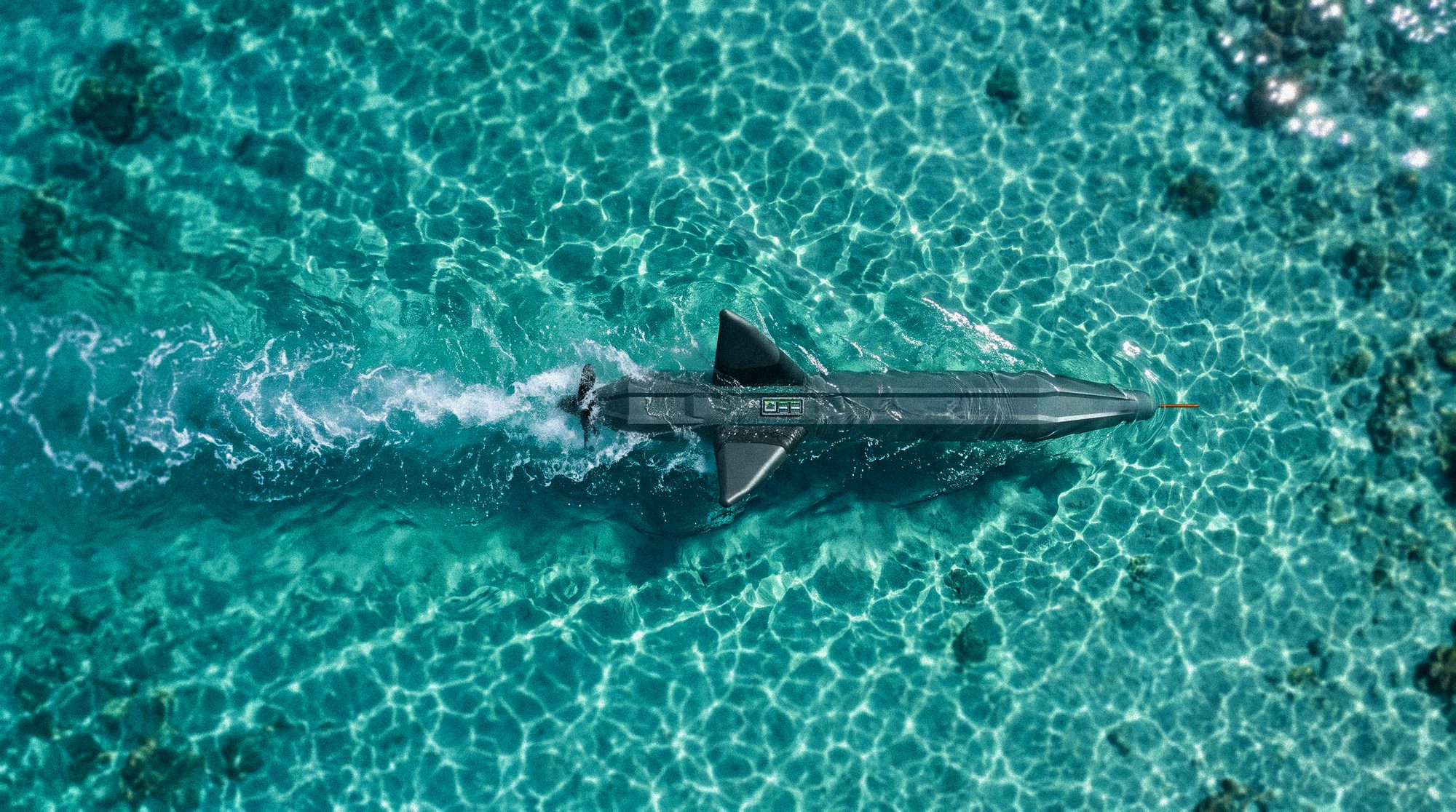
The body tapers to a rounded nose that carries the sensing payload as far forward as possible, giving the sensors a clear field ahead — with compute amidships and propulsion at the tail. Steering runs through just two side-mounted fins — deflect them together and the body rolls, deflect them opposite and it turns, so a single pair of servos does the work of a full four-fin tail.
Frame
A machined aluminium airframe — light, stiff, and corrosion-resistant for sustained operation in saltwater.
02 — Frame
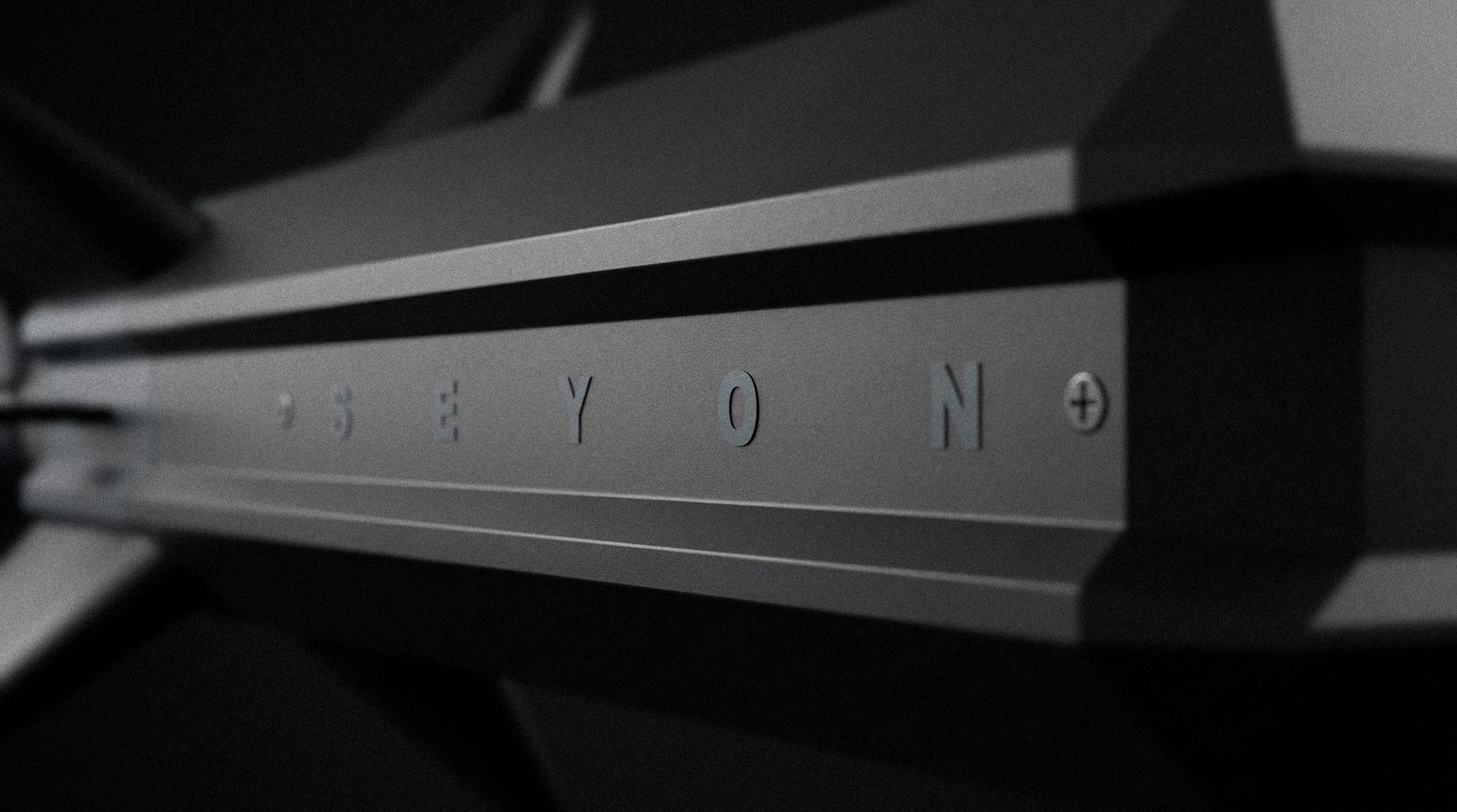
The airframe is machined from high-durability aluminium — chosen for its strength-to-weight and its natural corrosion resistance in saltwater, so the hull stays light and stiff through sustained operation without a heavy protective coating. The taper is shaped to keep flow attached along the body, cutting drag at cruise and feeding the fins clean, undisturbed water.
Field-Ready
Fully portable — built up in the field, with USB and Ethernet broken out through the hull for wired diagnostics.
03 — Field-Ready
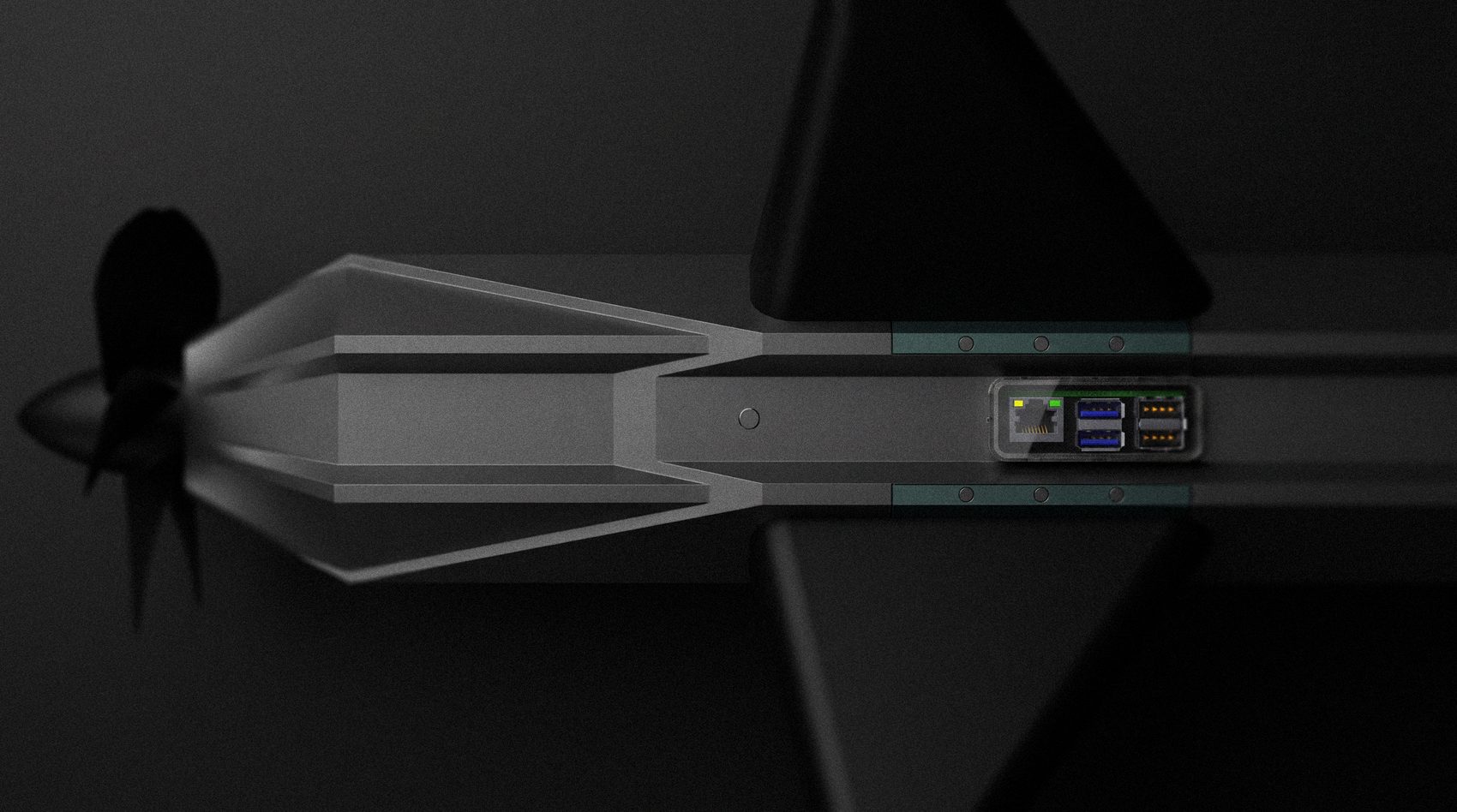
Khanivore is designed to be assembled and serviced wherever it's needed, not just in a depot. A breakout panel brings USB 2.0 ×2, USB 3.0 ×2 and Gigabit Ethernet out through the hull for wired diagnostics and data offload, and a separate USB-C port gives quick access without opening the vehicle. Four side bolts and a pop-off electronics panel mean a small team can build it up, check it, and close it in the field.
Man-Portable
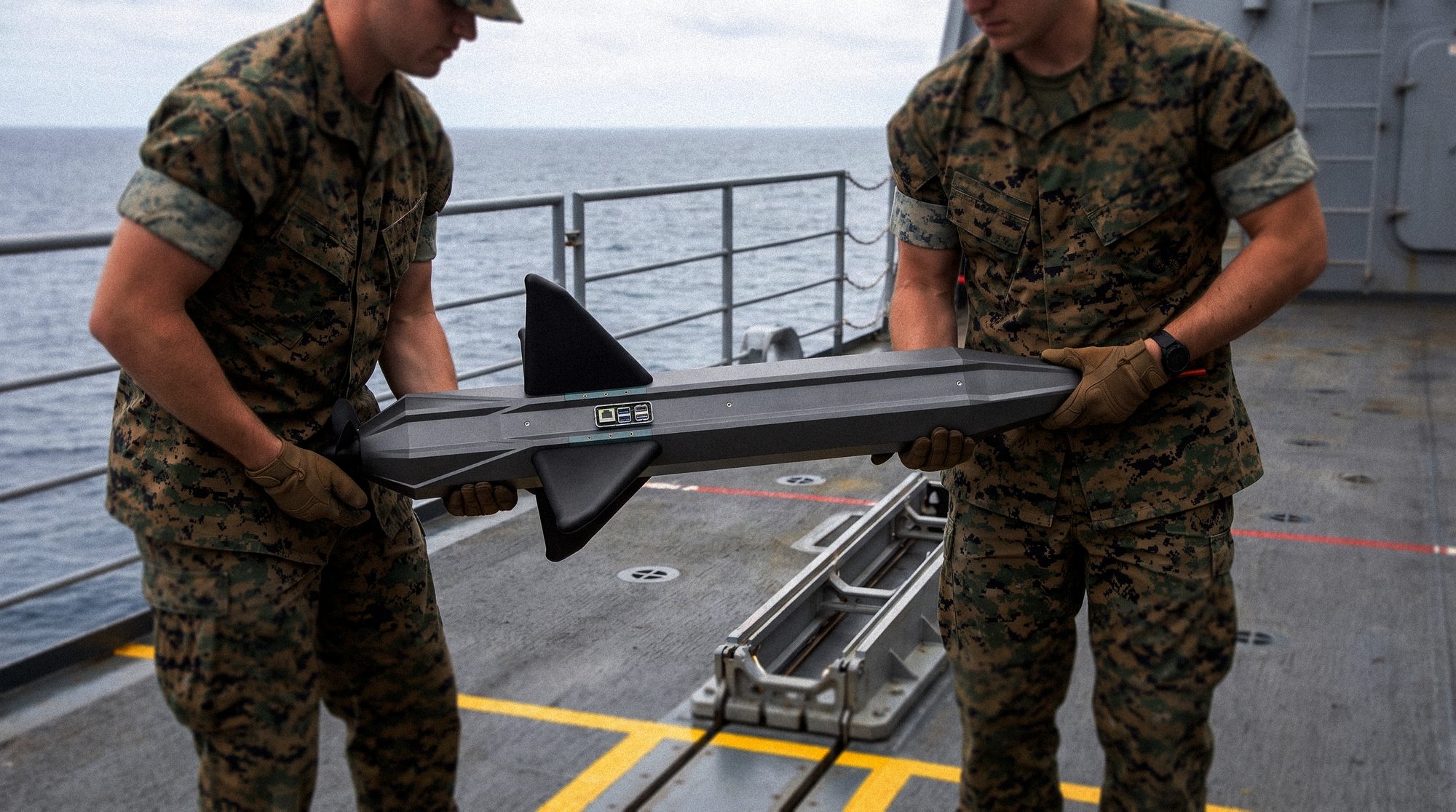
Light enough for a two-person team to move and set by hand — no crane, no cradle.
04 — Man-Portable
Because it's small and light, two people can carry, position and launch it by hand. There's no launch cell, crane or cradle to install, which means Khanivore can operate from vessels of opportunity — a patrol boat, a RHIB, a ship's deck — rather than a purpose-built platform. Portability is what lets a single team carry and launch several at once.
Deployment
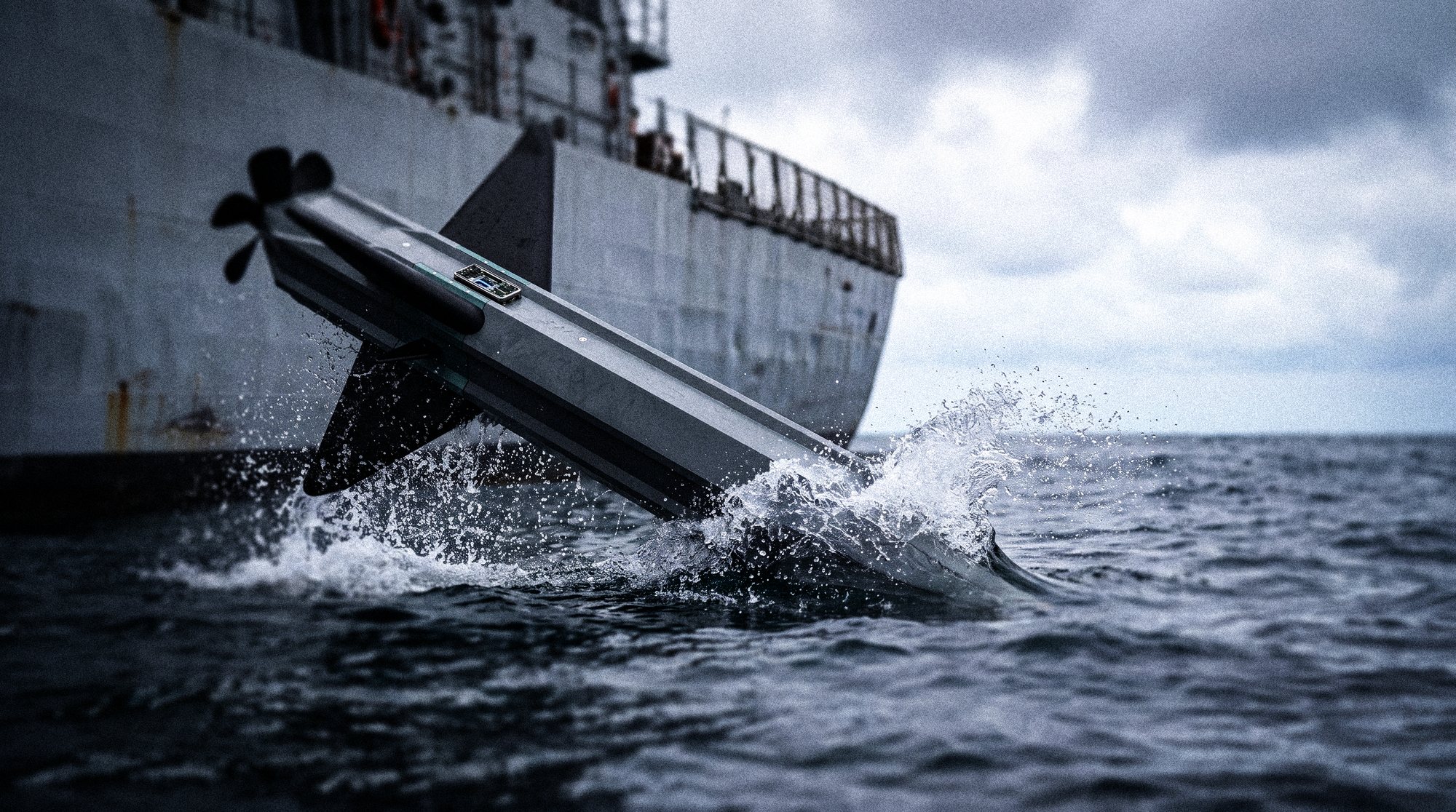
Launched straight from the deck of a host vessel, then away on its own.
05 — Deployment
Launch is deliberately simple: put it over the side and let go. Once it's in the water, Khanivore is on its own — no tether and no operator guiding it. It takes its tasking, gets to its patrol area, and runs the mission autonomously — one unit or many, released together.
Navigation
GPS at the surface, inertial dead-reckoning below, with sonar to correct drift.
06 — Navigation
A dedicated flight controller runs the real-time control loop, holding orientation from an onboard IMU and taking a GPS fix whenever it's at the surface. Underwater, where GPS can't reach, it dead-reckons from the IMU and uses sonar as a secondary reference to catch and correct drift — so it always has a working estimate of where it is, connected or not.
Interception
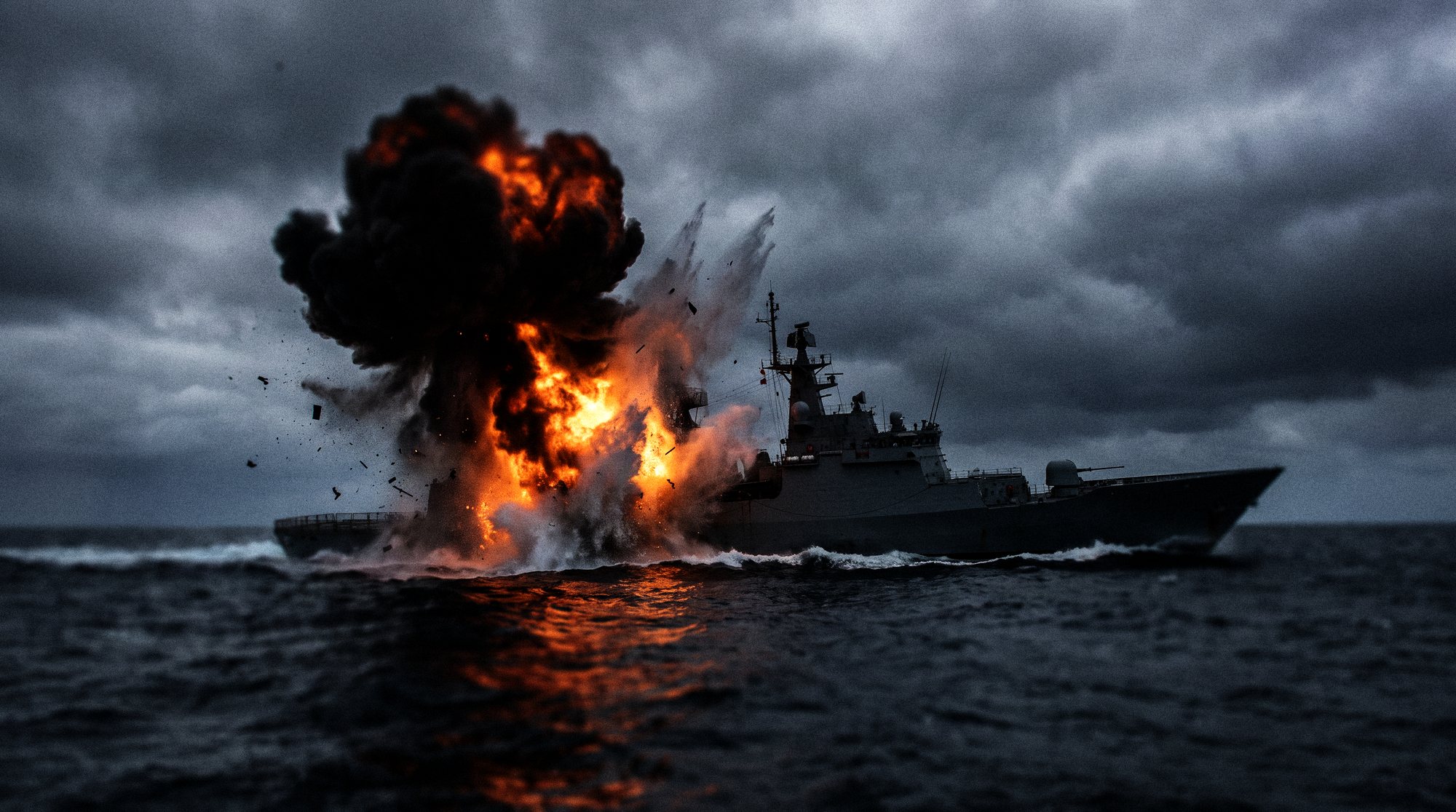
Khanivore runs down a hostile combat corvette and neutralizes it at the waterline — the mission it was built for.
07 — Interception
Each unit sees for itself: active sonar handles long-range detection and ranging, and a forward camera gives close-range confirmation once sonar narrows things down. Running as a leaderless swarm, the units score themselves on battery and position every cycle so the point role passes automatically as batteries drain — no single controller to lose. Together they find, track, and close on a target at the waterline.
Back to
All Products →SQ-1 · Compact Recon Quadcopter
Built to see around corners.
Design
A 30 cm footprint, waterproof — built to slip into tight spaces.
01 — Design
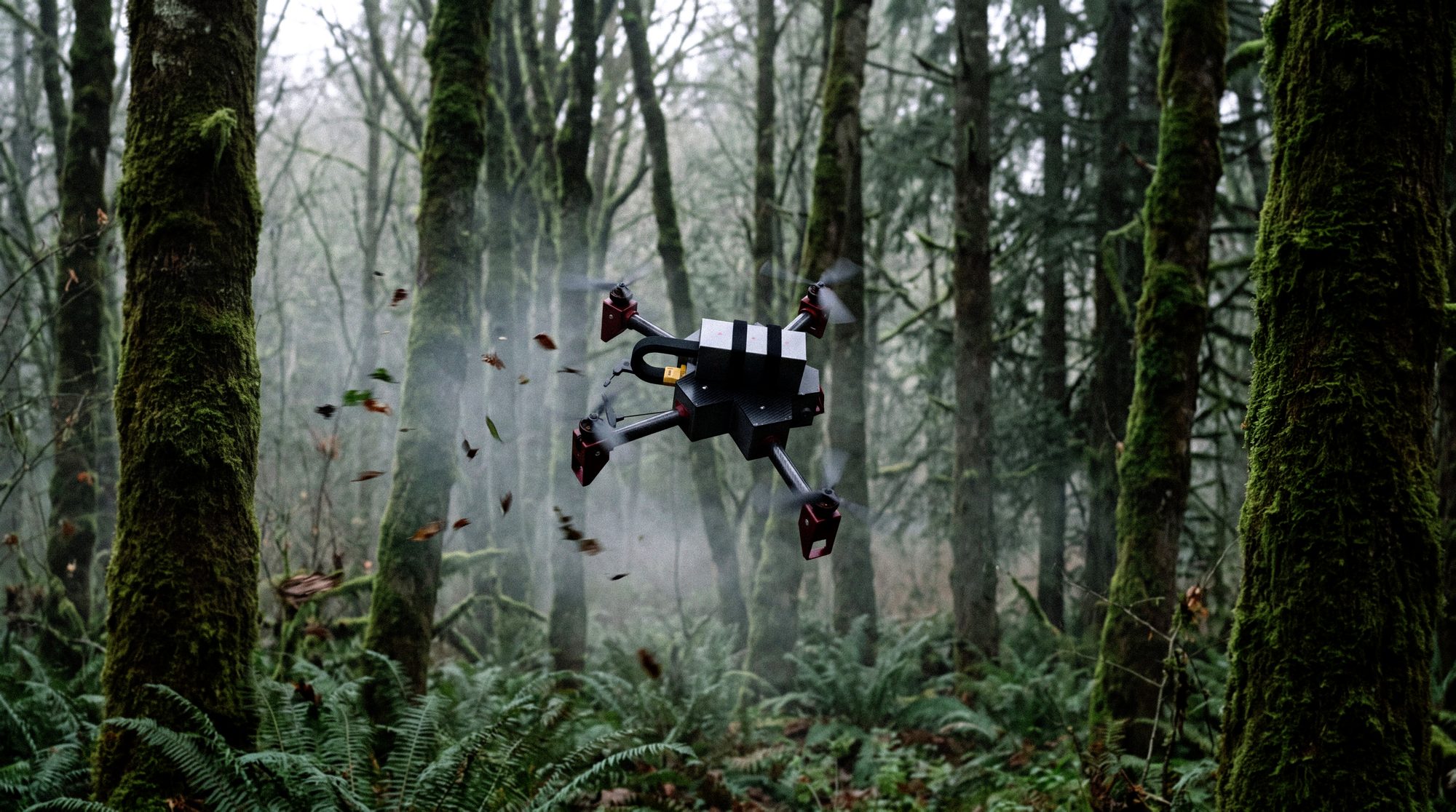
Squirrel is a 3-inch FPV airframe with a 30 cm overall footprint — small enough to clear a doorway and thread a tight interior. Its custom deadcat arm layout is where the name comes from: the "flying-squirrel" geometry. The whole airframe is waterproof, so rain, spray, or a wet interior doesn't end the flight. Built for one job: getting eyes into a space before you do.
Power & Payload
Thrust to spare for hard manoeuvres — and to carry a payload.
02 — Power & Payload
With a thrust-to-weight ratio around 4.5:1, Squirrel hovers at roughly a fifth of its available power — and that surplus is what makes it quick. It's the reason the aircraft responds instantly to throttle, snaps to a stop, and holds sharp turns and vertical corrections in tight spaces. The same headroom is deliberate lift: the frame carries about four times the aircraft's own weight, so a mounted payload — an extra sensor, a relay, a small deliverable — rides along without costing the handling. Eight to eleven minutes of flight per battery.
Durability
Carbon arms and a printed frame that shrug off a clipped wall.
03 — Durability
It's built expecting to get hit — because it will. Carbon-fibre arms and an impact-tested printed frame, validated in simulation to over 119× its expected operating load, make a clipped wall or a rough landing a non-event. Solid carbon top and bottom plates enclose every internal component — no bare boards, no dangling wires — and the battery swaps out without removing a single plate. The landing gear is modular, with interchangeable leg heights to suit different payloads. The parts most likely to take a hit — the motor mounts and arm sockets — are 3D-printed, so a cracked mount is a few grams of filament, not a write-off.
Man-Portable
Under 300 grams — carried, launched, and recovered by hand.
04 — Man-Portable
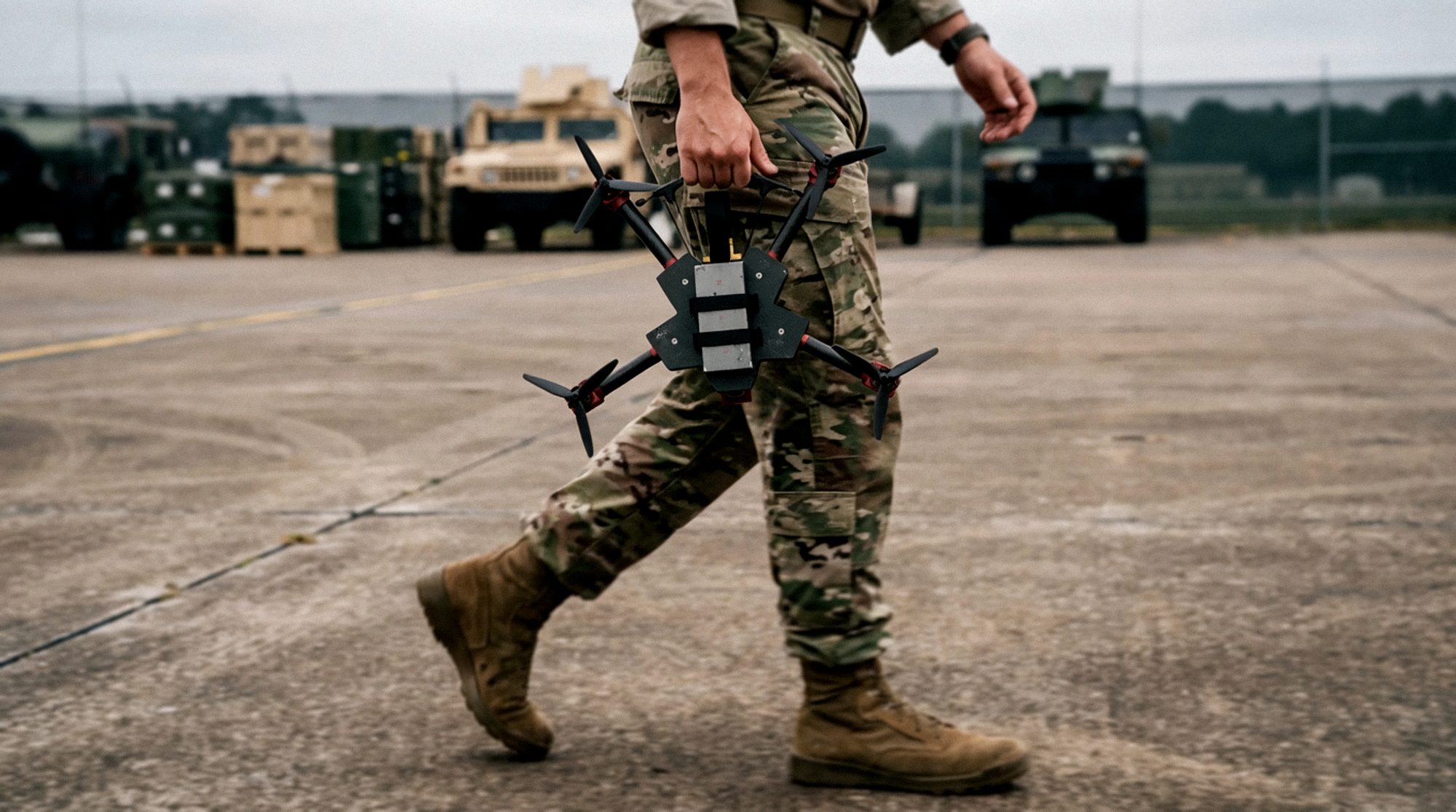
Under 300 grams — about a quarter of what the frame is rated to lift — so it's carried, launched, and recovered by hand. No launcher, no cradle, nothing to set up. It travels in a pack and deploys the moment it's needed.
Speed
60–90 km/h in a 3-inch airframe.
05 — Speed
Squirrel runs at 60–90 km/h (37–56 mph) — quick enough to cover open ground between buildings or dash down a corridor and out the far side before anyone reacts, yet still settled in the tight interiors it's built for. The speed is there on tap when the pilot calls for it, not a setting it's locked into.
Overwatch
Scouting the ground before the patrol walks it.
06 — Overwatch
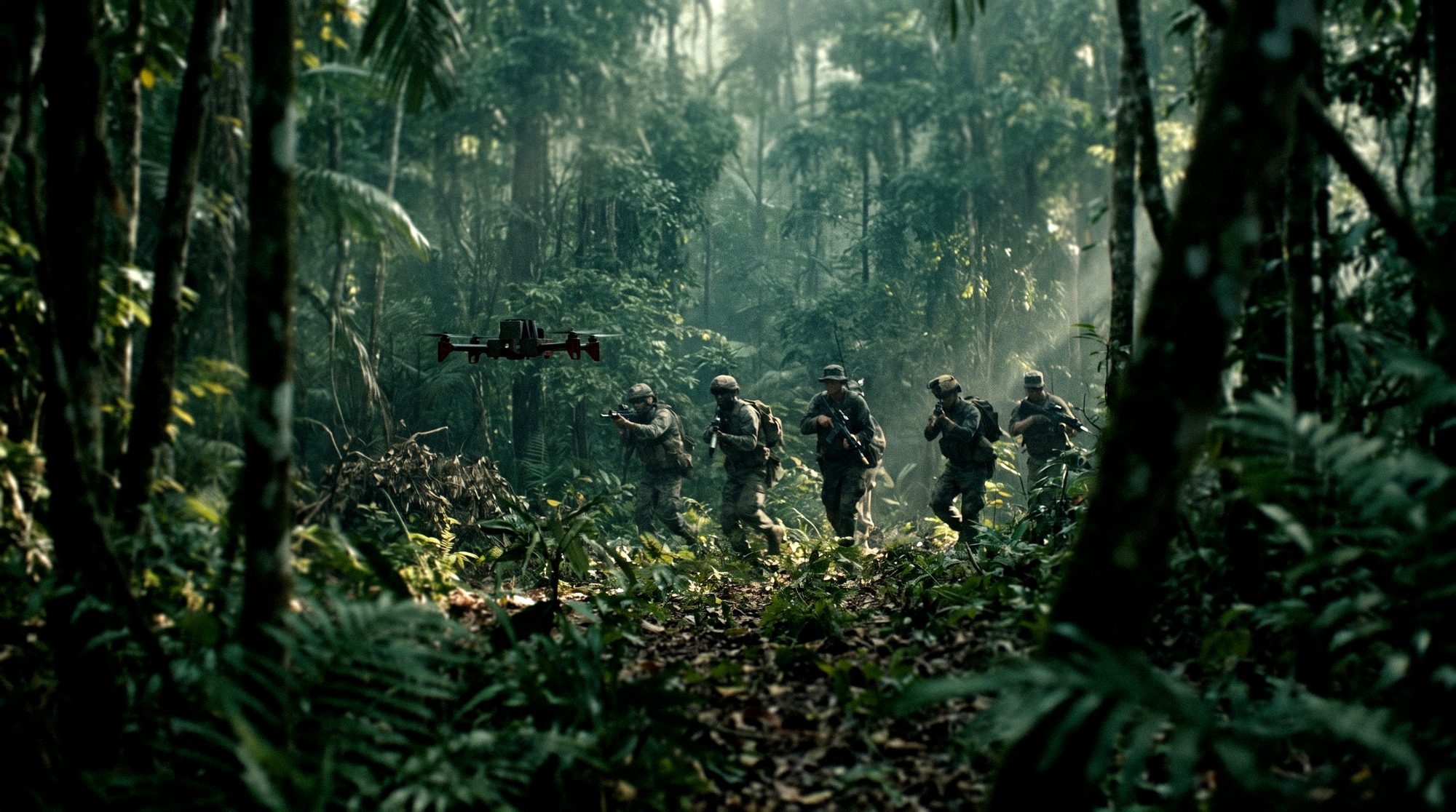
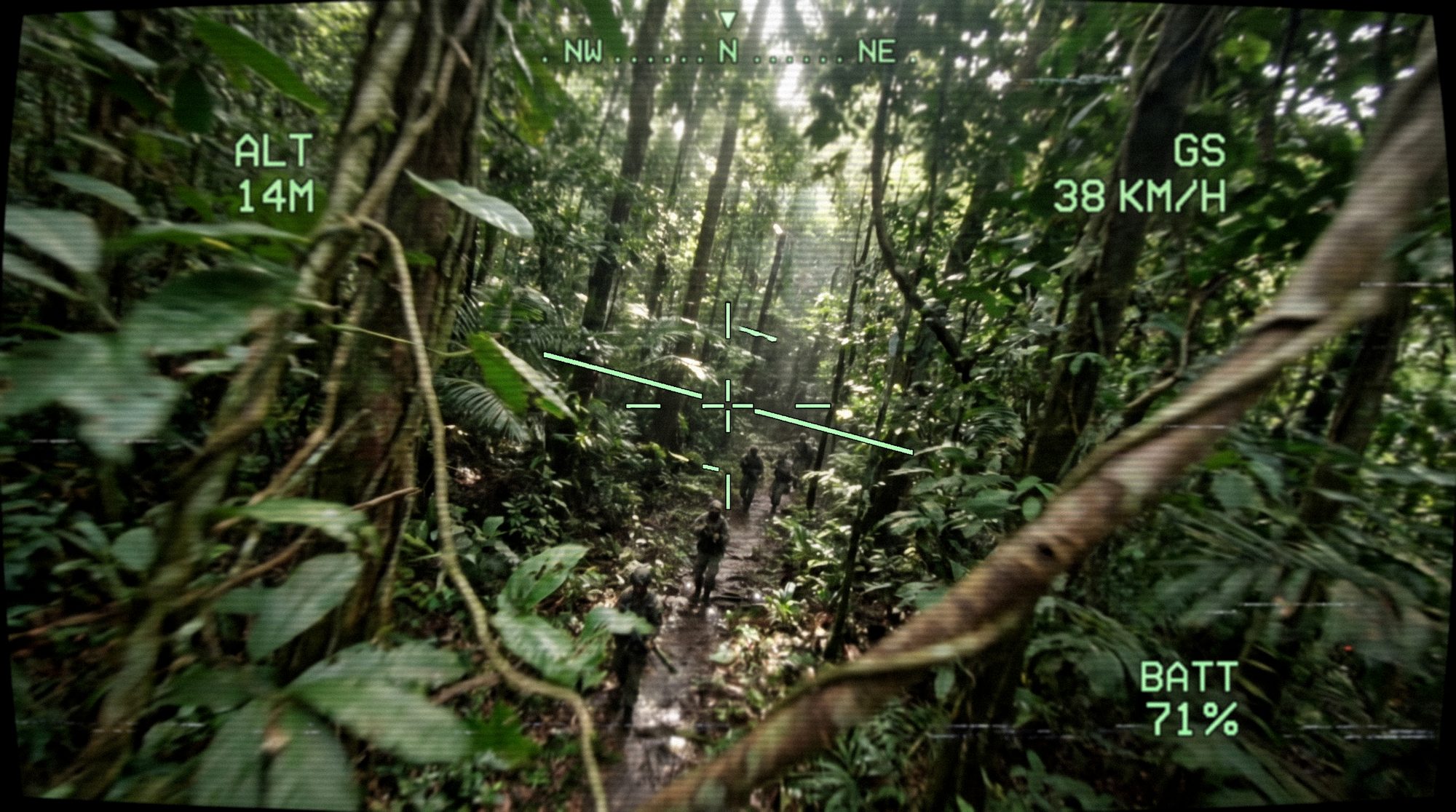
Out ahead of a moving element, Squirrel turns blind corners and dense canopy into known ground — pushing forward to check a trail, a treeline, or the next room while the team stays covered. It buys the one thing that matters most on an unfamiliar approach: knowing what's there before you commit to it.
The Feed
A wide-dynamic-range camera and a link that punches through walls.
07 — The Feed
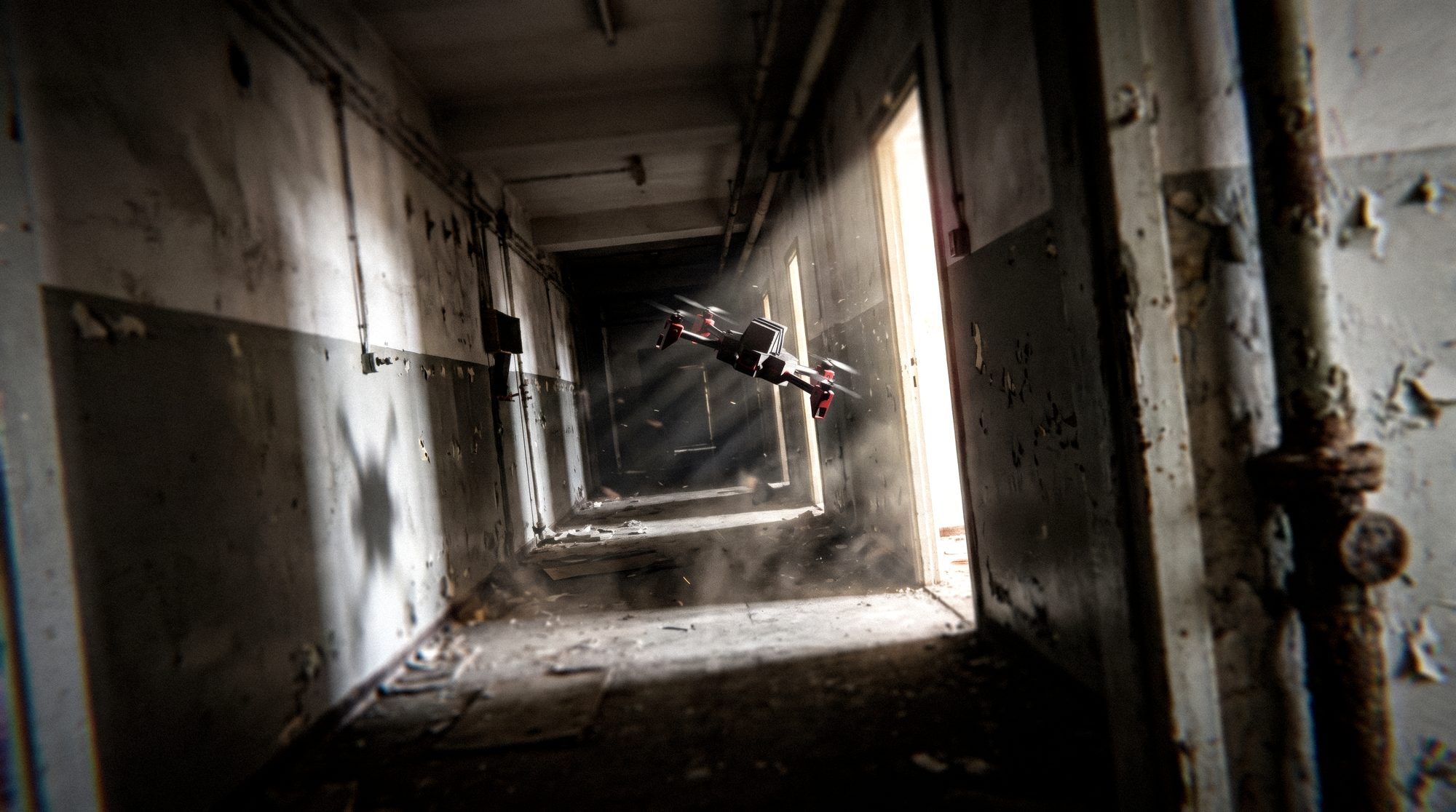
A wide-dynamic-range camera is built for exactly the lighting a recon flight throws at it — a dark hallway with a bright doorway at the end — without blowing out the highlights or losing the shadows. The live FPV feed views on any laptop or FPV goggle over a 2.4GHz digital link that punches through walls and floors. By design there's no GPS, no autonomous tracking, no follow-me: indoors GPS doesn't work anyway, and a trained pilot's eye still beats an algorithm at reading an unfamiliar room. Every flight is flown, not delegated.
Back to
All Products →